Fire Pit Contractor in Appleton, WI: Siting, Smoke and the Base Under the Stone
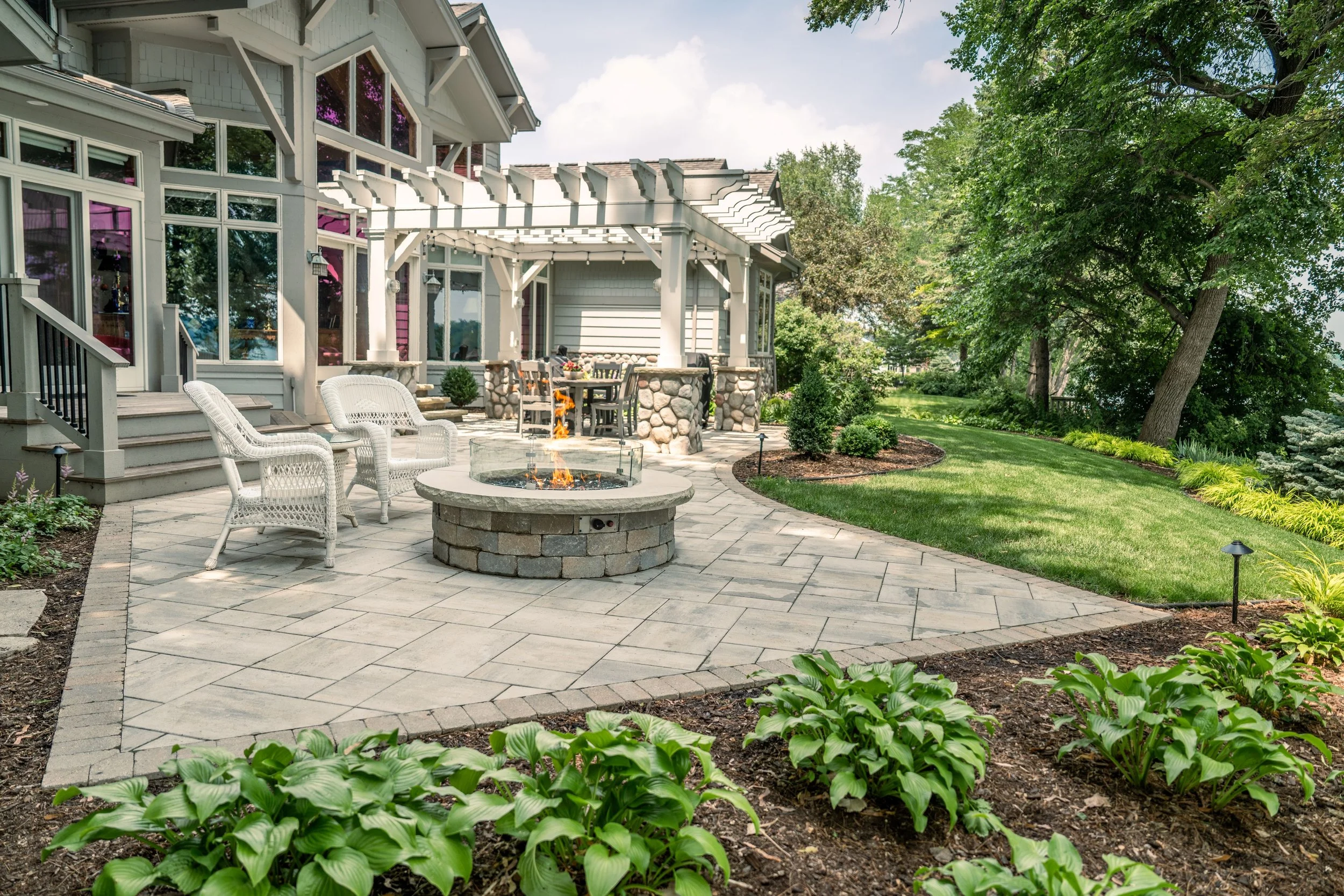
Most of the fire pits our crews set in place get used hardest between the first cool week of September and the last clear night before the snow stays. Hiring a fire pit contractor in Appleton, WI turns out to be less about the stone you can see and more about what gets decided first: where the fire sits, how the smoke moves, and what holds the ring level through a Wisconsin winter.
Van Zeeland Nursery & Landscape has been landscaping yards throughout Appleton, Neenah, Darboy and the entire Fox Cities since 1932. The ground here has not changed in that time, and frost still lifts anything set straight onto soil.
A fire pit reads as a simple object, so homeowners often assume it can be dropped anywhere once the landscape is finished. The ones that earn their place are sited deliberately, sized to the group that gathers, and built on a base that holds.
Related: Top Fire Pit & Outdoor Lighting Ideas for Menasha, WI, Backyards
Where Should a Fire Pit Go in a Fox Valley Backyard?
Placement decides use. A pit at the far edge of a lawn photographs well and then sits cold, because nobody walks out to it on a forty degree evening in October.
We typically site the fire within easy reach of the patio and the door people already use, with a level path underfoot for the walk out after dark. Prevailing wind matters as much as distance, since the seat that catches smoke is the seat nobody takes.
Clearance sets the outer limit. Distance from the house, from a wood fence line and from overhanging branches all factor into where the ring can legally and safely sit, and those are easier to solve on a drawing than on the day of the build.
How Much Room Does the Seating Really Need?
Comfortable seating sits roughly four to five feet back from the edge of a wood burning fire, a little closer around a gas flame that throws less heat.
That spacing sets the footprint, and the footprint is the part that surprises people. A pit meant to hold eight generally needs a paved area close to twenty feet across, and that space has to be found while the design is still on paper.
Circulation adds to it again. People need room to walk behind the seating without turning sideways, so a patio sized only to the chairs feels tight the first time the space is full.
What Goes Under the Stone, and Why Does It Matter Here?
Northeast Wisconsin runs through dozens of freeze and thaw cycles between November and April, and each one lifts whatever sits on unprepared ground.
Our builds start with excavation to subgrade, a compacted aggregate base, and drainage that carries water away from the ring instead of under it. None of that shows in a finished photo, and it is the reason a pit is still level in year ten.
If two quotes look alike, base depth and compaction are the lines to read first. A quote that names neither is pricing the stone and hoping about everything beneath it.
Related: Enjoy Cozy Evenings Outdoors With Custom Fire Pits in Sherwood and Harrison, WI
Should You Build for Wood or for Gas?
Wood burning pits give you the heat and the crackle people picture, and they ask for a woodpile, ash cleanup and attention to smoke direction.
Gas units light in seconds, burn clean and suit a household that wants the fire on for an hour after dinner. The choice changes the build, because a gas line has to be trenched and sleeved while the base is open.
Decide it early even if you are unsure. Running a sleeve during construction costs very little and leaves the gas option open, while adding one afterwards means opening a finished patio.
What Should a Fire Pit Contractor Look At on Site?
A site visit that runs ten minutes and ends in a price is a thin basis for a build. Our designers check grade and how water leaves the yard today, distance to the house and to overhead branches, utility locations, equipment access, and how the fire ties into the existing patio and plantings.
We also ask how you use the yard now, because a pit for two people with a book is a different object than one built for a neighborhood gathering. Those answers sit behind everything we design under fire pits and fire features.
Those answers shape the drawing before a single material is priced. They also decide the material itself, since a formal paver ring and a natural boulder surround suit different houses and different yards.
Planning a Fire Pit for the Appleton Season Ahead
If you are weighing a fire pit for this fall or looking ahead to spring, our design team can walk the yard with you, show you where the fire belongs, and put real specifications behind the number on the page.
Talk to Van Zeeland Nursery & Landscape about fire pit design and installation for your Appleton property.
In Summary
How long does a fire pit installation take in Appleton, WI?
Most residential fire pit builds run three to five working days on site once the design is approved and utilities have been located. Grading, drainage or a gas line in the same scope typically adds a few days.
Can a fire pit be added to a patio that is already finished?
Adding one to a finished patio is common work. It usually means lifting and resetting a section of paving so the base under the pit matches the rest of the patio, which is why building the pit into the original design costs less.
Is fall a workable time to build a fire pit in the Fox Cities?
Fall is one of the steadier build windows for Van Zeeland Nursery & Landscape. Ground conditions in the Fox Cities stay workable into late November in most years, and booking now often means the fire pit is ready for the first cold evenings rather than partway through spring.
Related: Your Guide to Fire Pit & Outdoor Lighting in Grand Chute, WI: Design Tips for Cozy Nights