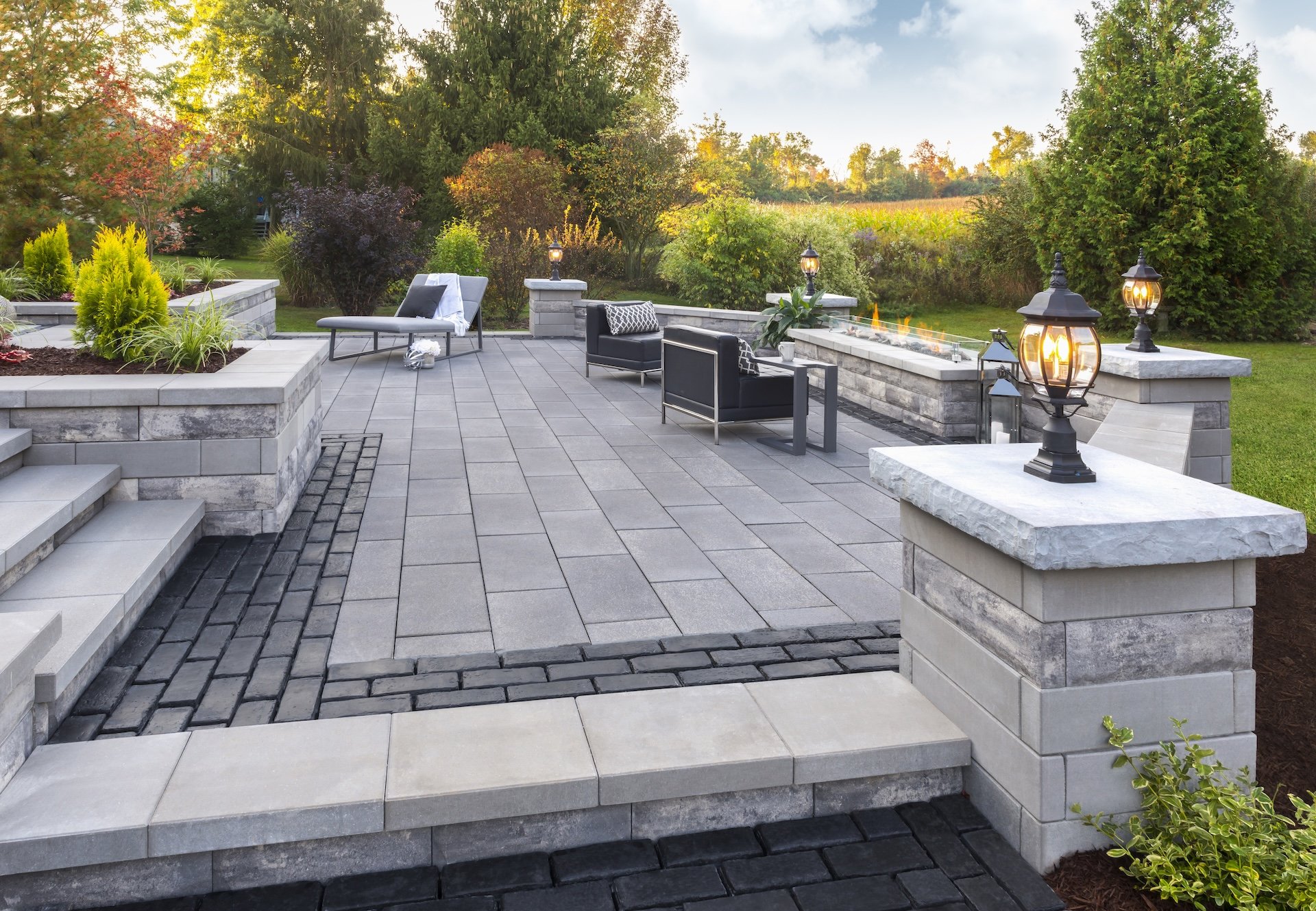
When it’s treated like a finishing detail instead of a spotlight, outdoor lighting in Grand Chute and Neenah, WI, can bring a landscape to life after dark. The goal isn’t to flood the property with brightness or turn the front or backyard into a stage. A thoughtful lighting plan supports how you move through the space, highlights what matters, and creates a welcoming glow that feels natural.
Related: Your Guide to Fire Pit & Outdoor Lighting in Grand Chute, WI: Design Tips for Cozy Nights
Adds Warmth Through Layering, Not Brightness
The best results come from layering multiple light sources at lower levels instead of relying on a few intense fixtures. A layered plan usually includes subtle ambient lighting, task lighting for key functional areas, and accent lighting for texture and focal points. This approach avoids harsh contrast and reduces glare, which helps the landscape feel comfortable rather than overlit. When fixtures are placed intentionally, and the beam spread is chosen carefully, the effect reads as atmosphere instead of a collection of bright spots.
Helps Your Home Feel Inviting After Dark
A home feels calmer and more welcoming at night when dark corners are softened, and entrances, steps, and transitions have a gentle glow. The goal is to create comfort without drawing attention to the fixtures themselves. We often focus on lighting that supports the way people arrive, gather, and move through outdoor areas, especially around front entry features, drive approaches, and seating zones. When the glow stays consistent from one area to the next, the entire property feels more inviting.
Highlights Texture, Not Just Objects
Warmth comes from revealing texture and depth, not from lighting up every object. Instead of pointing light directly at a single focal point, techniques like grazing or washing a wall with light can show off surfaces and layers in a subtle way. Natural stone, wood grain, ornamental grasses, and layered evergreens take on more dimension with the right angle and intensity. The landscape looks richer when shadow is allowed to exist, creating contrast that feels intentional rather than flat.
Related: Top Fire Pit & Outdoor Lighting Ideas for Menasha, WI, Backyards
Guides Movement Around Patios and Walkways
Patios and walkways become easier to use after dark when lighting supports movement without overpowering the scene. We focus on transitions, not just destinations. Soft illumination along walkways, steps, and changes in elevation helps the space feel connected without looking like a runway. Keeping brightness low and consistent allows the light to stay in the background while still guiding people naturally through the landscape.
Keeps Focal Points Selective
A lighting plan starts to feel overdone when everything gets lit the same way. A better approach is to choose a few strong focal points and let the rest of the landscape settle into softer shadow. We typically highlight elements that already carry visual weight during the day, such as a specimen tree, a planting bed with seasonal blooms, a pergola, or a natural stone feature wall. The lighting should reinforce the design, not compete with it. When the focal points are chosen carefully, and the number stays limited, the result looks elegant and restrained.
Avoids Glare With the Right Placement
Glare is what makes lighting feel harsh, even when the fixtures themselves are high quality. The key is keeping the light source shielded and the fixture discreet so the beam stays directed where it belongs. We use placement and shielding to prevent light from spilling into windows or across open lawn areas. The most natural look happens when the glow seems to come from within the landscape rather than from visible bulbs or bright cones of light.
Uses Color Temperature to Match the Mood
A warm, welcoming look depends heavily on color temperature. Cooler light can make outdoor spaces feel stark and overly modern, especially around natural stone, wood or warm-toned pavers. Warmer tones create a softer effect that blends into the landscape and supports a relaxed atmosphere. The lighting also looks more intentional when all fixtures match in tone, which keeps the overall design from feeling patchy or inconsistent.
Related: Transforming Your Hortonville, WI, Yard with Van Zeeland Nursery & Landscape